Wednesday, April 1, 2009

Never Gave Up: A Peace Tale About Hip Hop and Fifth Grade Hopefulness

The fifth grade class in Room 101 was no picnic. By the end of September, they were already on their third teacher. The first had some kind of a heart attack during the first week (but would recover). The second was a demure but severe long-term substitute with no formal teaching experience. And the third - a kindly, well-intentioned, slightly-overweight white man named Mr. Booth - was earnest but struggling.

When Janet and I walked in for our first Peace Games class at the beginning of October, we both expected to encounter a mild case of chaos. Not surprisingly, that was exactly what we found. We brought a modified version of the lesson - cutting out about 20 minutes of superfluous icebreakers - but it was immediately apparent that we did not cut nearly enough. Adjusting to three teachers in five weeks had made the students tired, suspicious, and understandably restless, and it showed. They thought nothing of barking at each other from across the room or getting up and walking around without regard for anything the three 'teachers' said. We were hardly more effective at crowd control than we were at teaching, learning students' names from the many reprimands parceled out by Mr. Booth. By the time we stumbled out the door, Janet and I were both speechless.

The months that followed saw the class fall into something resembling a routine that managed to find comfort with a persistent low-level chaos. Classes were always noisy and somewhat free-form, with a fair share of scolding (from the adults and children in equal measure), but it was clear that Mr. Booth - for all of his on-the-job training and baptism by fire - had earned the affection and respect of the students. Despite ample reasons to be discouraged - even crestfallen - he was always unfailingly optimistic and hopeful. He was never at a want for an encouraging word, and his mind was always at work trying to come up with new ways to capture his students' imaginations or motivate them to achieve higher. (One morning, I was shocked to come into his classroom and see a full-sized replica of a fully-operational traffic light, which Mr. Booth cheerfully explained was going to anchor his new behavior management system. It worked for a while but before long became just quirky and distracting.) Most revealing, though, was the fact that his students - in all of their craziness - clamored to be around him. They came early, stayed late, and seemed to bask in the attention he lavished on them.

When the spring rolled around and it was time to start thinking about a Peacemaker Project, Janet and I approached the process with something like hopeful trepidation. By this time, Janet had taken over lead teaching, although I regularly backed her up. Despite the stress that they induced in us, we - like Mr. Booth - had grown to enjoy these students a lot. They had character. And so when they told Janet, maybe impulsively, that they wanted to write a hip hop song for their project - a prospect that would surely have scared off teachers less novice than any of the three of us - she sought out a way to make it happen.

We asked around and found a local hip hop artist who said he'd come to the class. The visit was an occasion that prompted both fifth grades to crowd into the small classroom for an impromptu concert and discussion about positive hip hop lyrics and a session of brainstorming ideas. The whole class spent a few weeks on free-writing exercises and then started writing draft verses. Most of the first drafts centered around how they were 'the best rapper alive' - or similarly-themed self-referential odes - which we gently tried to redirect to issues that they saw in their communities. Before long, the ideas came freely: drugs, violence, single parenting and absent fathers, even hope that someday there would be a black president.

With verses in various draft stages, Janet set out to find a way to record the song. The classes became increasingly cantankerous, as students competed to collaborate with each other or have more or less of their verse included in the final product. And when Janet brought in music samples and had them try rapping to a beat, everyone had an opinion on which songs were or were not good enough and everyone wanted to be heard at once. It was as loud and as chaotic as it had been on the first day. And yet this was not the same as the first day. Somehow, this chaos felt more focused.

When she wasn't in class or working with students on their verses, Janet was calling around trying to find a recording studio. Finally, she got in touch with some graduate students at the Berklee College of Music who agreed to sign out a recording studio for a day so they could record and mix the students' song. It was the field trip to beat all field trips. We took the train to Berklee in the morning and crowded into the studio as the Berklee students explained the process: first, they'd figure out some music samples and loop them (when our students started singing along to the chorus of 2Pac's "Baby Don't Cry," they knew they found the hook); then, they'd bring students in two or three at a time to record lyrics; and finally, they'd edit it all together. If all went well, we'd be able to walk out that same day with a CD in our hand.

It wasn't always easy. Students got restless when they weren't recording. Some needed more takes than others to get it just right. A couple of students asked Mr. Booth to read their verses for them at the last minute (which he did). But when we finally arrived back at the school at 2:00, they were able to borrow a CD-player from the kindergarten teacher across the hall and debut their song for the first time with the principal and several of the other adults in listening in. It was a remarkable moment. Students were beside themselves with pride, unselfconsciously singing along to their own voices and smiling broad smiles. Adults, very few of whom would have been able to imagine such a moment back in September, were astonished.


The fifth grade students who wrote that song in the spring of 2002 are turning 18 this year. I wonder often where they are, what they're thinking, what kind of people they have become, and what else they've accomplished. I don't take for granted the fact that the road has not been easy for some of them, but I'm hopeful that the verses they wrote in their halting ten-year-old handwriting have stayed with them on the journey.


Never Gave Up
Mr. Booth's Fifth Grade (2001-2002)

Let's share the Nathan Hale virtues:
peace, community, pay your dues
We are the future, so we're here right now
To keep the peace, and we'll show you how

Yo, the violence in our community is insane
It is deformed and ugly, (what would I like to do?)
I am the future
stop these drugs, stop these thugs,
stop the illin', stop the killin'
Yo, yo, when you smoke, it messes up your brain,then you start going insane
You start getting weak, you won't be able to take the heat
Aright, aright, okay, come on,
Yo, people need to help each other out
Yeah, killin's not the answer, without a doubt,
Alright, goin' to the store to gettin' shot, what's that all about?
There's shootin' at night, that's not even right
It takes your brain, then it gives you a death...

Baby don't cry, hope you got your head up
Even when the road was hard, you never gave up
Baby don't cry, hope you got your head up
Even when the road was hard, you never gave up
Baby don't cry, yeah
Baby don't cry

What's going on with our community today,
we got drive-by's like every day
You see drug dealers ain't keeping it clean
We tryin' to set the world free with dignity
I love the world with dignity
C'mon (yeah, I feel ya)
Anger's like a stranger,
it's about to change ya
Let the change be for humanity

Our rap is clear, our message is plain:
violence and drugs will drive you insane
One, your vein, feel the shame, miss the train,
You'll ruin your brain on cocaine
Don't even know your name

Baby don't cry, hope you got your head up
Even when the road was hard, you never gave up
Baby don't cry, hope you got your head up
Even when the road was hard, you never gave up
Baby don't cry, yeah
(Listen to your teacher)
Baby don't cry


Yo, it's united we stand, divided we fall
We should respect each other,
whether blacks, whites, Latinos, and all
I can't take the pain
There are gunshots springing, bullets like rain,
But they don't fall soft, only hard
I just want you to relax, till I picture you, God

We are diverse, with all different faces.
How come our presidents don't share our races?
White's alright, but in my crayon box
there's also reds, yellows, and blacks
We can be anything we want to be, but it will take time
Even if you're too busy, our future will not wait

Baby don't cry, hope you got your head up
Even when the road was hard, you never gave up
Baby don't cry, hope you got your head up
Even when the road was hard, you never gave up
Baby don't cry, yeah
Baby don't cry


We have teen pregnancy and we can't be free till we stop and see
Can we please stop and see?
Family is a need, not a want,
Doesn't matter if it's a mother or not
But where are the fathers when their kids need 'em the most?
They're out sowing their royal oats

We are the future of the world today
We need to stop and pray, people are dyin' everyday
Without education, can't do what we want, can't make our dreams come true
Tomorrow's sunrise is the light we see
Tomorrow's promise is ours to keep
The world we share is under the gun,
the peace and creatures for everyone
We believe in humankind, no one will be left behind
If you are lost, let me draw you a map:
We're from the Hale School,
and this is our rap!

Baby don't cry, hope you got your head up
Even when the road was hard, you never gave up
Baby don't cry, hope you got your head up
Even when the road was hard, you never gave up
Baby don't cry, yeah
Baby don't cry


Monday, March 23, 2009

Giving Children Choices That Matter

Recently, I listened around the fringes of a conversation about a new method of teaching reading, writing, and spelling that - I thought, strangely - endorsed the idea that teachers should not correct spelling mistakes. The notion, apparently, is that children will learn how to spell when they're ready. I realize that I may be vastly (and unfairly) oversimplifying the theory, but whether one agrees with it or not, I can appreciate the intention to let children direct some of their learning. I'm a big fan of empowerment.

Personally, I think literacy depends on teachers teaching literacy, in much the same way that true peacemaking depends on teaching peace. But that's not to say that children shouldn't have practice making decisions that affect them. Thinking about this reminded me of a last ditch attempt to teach a class of recalcitrant third-grade revolutionaries and what finally got through to them. At the end of our rope - utterly frustrated by their attempts to thwart our best intentions - we inadvertently gave them a real, honest, sincere decision to wrestle with. And much to my surprise, they rose to the challenge.

+ + +

The class was being taught by a young adult volunteer whose best attempts to reach them were shunned at all turns. After five months, they had broken her to the point where she said that she couldn't teach it anymore. I'd observed the class on a couple of occasions and could see what she meant. They appeared to have grown considerably meaner and more aggressive than the docile second graders I remembered. The final straw was when they started booing the volunteer when she walked into the classroom. Having run out of other tricks, I suggested that perhaps they need to be given the opportunity to refuse Peace Games.

We talked to the teacher and came up with a plan for a classroom meeting during which we would allow students to give honest feedback about the year so far and then suggest where we go from here. The teacher agreed. (I wondered if maybe she was a little overeager to agree, but I left that aside).

On the afternoon of the meeting, we met in the classroom just before the students returned from recess and pushed all of the desks to the side. We arranged the chairs in a large circle - not an easy feat in a classroom that small and crowded. The teacher went to fetch the children from recess, and when they turned the corner and saw the set-up many of the students seemed momentarily stunned. Not one to take any chances, the teacher assigned each one of them a seat in the circle, careful not to put any volatile combinations too close, and then turned it over to me.

I tried to facilitate the meeting with a seriousness that would hopefully both hold their attention and urge them to participate. I began by stating the obvious: "So it seems like there are a lot of things that you don't like much about Peace Games lately." This elicited lots of nods and muttering of agreement under their breath, acts of posturing and proving to me that I will not be able to make them peacemakers if they do not want to be. I seemed to surprise them, then, when I add, "It's understandable not to like some things. Maybe the answer is to do something else instead. Maybe Peace Games isn't for you, and that's okay." In response, some students were quiet and contemplative. Others expressed shock and disbelief.

We'd devised the meeting to be three parts: an overview, observations, and a decision. I convinced myself - and the volunteer and teacher - before we began that whatever they decided would be fine. If the students decided that they didn't want Peace Games, it might actually turn out being a relief for everyone: the volunteer would have less stress, the teacher could use the time for extra reading, and the students would have been entrusted with a big decision. What was the point of convincing them to stick with something that was only making everyone crazy? I realized that I had no investment beyond this conversation and making sure it was as genuine as possible.

And so, with the overview behind us, we moved onto observations. I asked them to tell me what they'd observed in Peace Games so far this year - good things or bad things - as a way to understand what has worked and what hasn't. We went around the circle to make sure everyone had a chance to talk, if they wanted to. They agreed that they like the skits that the volunteer has planned each week - a ritual which had seemed, to the volunteer, outright under attack. That said, many of them also agreed that they wanted more games. Some wanted more art. Others wanted to go outside, even though it was the middle of December. The prevailing theme seemed to be one of wanting the least amount of structure and as much control as possible - a combination which, of course, would mean chaos. "Surely, there's a balance," I observed.

As we moved onto the next steps, I made an observation: I had not heard anyone say that there was nothing they liked about Peace Games, which must have meant there was something worth saving. While some children seemed ambivalent about this, none disagreed. And in fact, several nodded their heads in vigorous agreement. The teacher and I both alluded to the Peacemaker Projects ahead, experiential projects that are next in line curriculum-wise but which require substantial teamwork. I explained that if we were going to continue with Peace Games, I had two things that were important to me: first, that we learned something (a pretty basic condition but one which couldn't be taken for granted), and second, that we worked together. The activities we used to accomplish this mattered less to me, I explained. Not everyone has had a chance to act in a skit yet, so we agreed that we would continue the skits until everyone had a turn. After that, we agreed that we'd try new things - like more art and more games.

Almost organically, a consensus seemed to emerge that we would continue having Peace Games. Before summarizing, though, I added one condition that seemed to be within the spirit of the meeting: if someone does not want to participate in Peace Games one week, they have the responsibility to make that choice. And their choice is either Peace Games or silent reading. Choices are good, but limited choices.

Everyone seemed energized by the meeting. It lasted more than an hour - well beyond the forty minutes allotted and far longer than any of us thought third-graders could sit still for - but we appeared to make real progress. The rest of the year was not without its bumps - in fact, it had more than its share - but we knew that when we had been prepared to surrender our complete control and share some of it with the students, they had risen to the occasion. Perhaps they were stunned into compliance by such a drastic change in routine. Perhaps they were humoring us the whole time. But perhaps they took the responsibility we'd given them and made the most of it.

That's not to say that we should forgo the tyranny of spelling tests, too, but it is a timely reminder that we ought to trust children with as many real choices as we're comfortable with. It's a strategy that's too often the last resort.

Tuesday, March 10, 2009

Human Bingo and Hopeful Signs of Spring

One afternoon in the spring, we play Human Bingo in the third grade. Everyone has a "Bingo" sheet on which a grid is printed and in which each square has a statement like “Has seen the new Harry Potter movie” or “Was born in Boston.” The goal is to find people who fit the descriptions in each square and have them sign your sheet - and each person can only sign one square per sheet. It's like controlled mingling, and it would be great at cocktail parties, but with 25 eight-year-olds I try to corral the energy somehow. As a way of keeping the class under some semblance of control, I challenge the students to see if they can do it without talking. (I have learned the deceptively easy trick that rules are more apt to be followed I disguise them as games or challenges, instead.)

This classroom has been a tough sell. The teacher seems to like me personally and certainly appreciates what I've been trying to do, but she has been unrestrained in her skepticism. And often with good reason. We seem to take two steps forward and one step back with this class, but we keep trying. I suspect that this counts for a lot - or at least, that's what I tell myself.

The game begins, and the scene is impressive as a largely-muted classroom is filled with third graders milling about and signing each other’s Bingo cards. After 10 minutes, it gradually starts to get louder, suggesting that a growing number of children have finished, so in a voice barely above a whisper I quietly ask how many have Bingo. Without warning, there is a sudden and overwhelming roar, then a piercing chant of, “Bing-go! Bing-go! Bing-go!” I cannot overstate how suddenly and how much it resembles a mob scene. Startled, I rush to calm them down and move on, thinking that the outburst has overshadowed the activity as the teacher - with a smile-like expression on her face that I can't quite read - moves to calm them down.

The next morning, I talk to her about the activity to try to gauge her feelings about it. I'm fully prepared to apologize for the chaos, but to my surprise, she feels delighted with the way it went. Not only were the kids celebrating success, she explains, but they also had fun. She goes on to tell me that both Jordan and Gwendolyn, two girls who have been on the forefront of an emerging anti-Peace Games insurgence, referenced Peace Games lessons in a recent writing assignment. “It’s starting to click,” she says. “I’m starting to see changes.”

I am stupefied, wondering if this is the same woman who not two months before had given me a stern talking-to about our persistent lack of effectiveness and wondering if these are the same students who have been unrestrained in their disdainful moans every time they see me walking into their classroom.

Instead, I just say, “Wow.” And make plans to go back next week.

Monday, March 9, 2009

An Honest Accounting

I visited a school this morning that played host to three of the players on the Boston Celtics. They were there to promote ReadBoston and Read to Achieve, two very worthy initiatives to promote literacy in the Boston Public Schools. Most of these events - or at least the ones I've seen - feature players coming into classrooms to read books with children. They're quick and fun and a thrill for everyone. This morning's event was different. It featured Paul Pierce, the All-Star forward on the Celtics, playing the lead in the school play: "The Emperor Had No Hair." It was terrific.

It reminded me of an event at another school that I saw in which the special guest was one of the morning DJ's from a popular local hip-hop radio station. Naturally, her visit caused some excitement. The plan was to have her come into a second grade classroom, introduce herself, take a few questions, and then read one of her favorite books before visiting other classrooms.

It all goes very well and according to plan. That is, until the question and answer portion, when to her surprise – and the surprise of the adults in the room – a majority of the questions address “Jam Scams,” a feature on the show during which the DJ’s make prank phone calls to unsuspecting listeners. The children are relentless. “Why do you do that?” they ask. “Why are you so mean to people?” they add. And from the uninitiated, “What is a jam scam?” Caught off guard, our guest punts the question and blames her partner. The Jam Scams are really his thing, she explains, without actually answering anything.

In response, and as a way to segue into the book without offending her guest, the principal suggests that maybe we should invite her partner to the school and tell him to be nicer to people. It would have been a nice idea, I think, but I doubt that it will actually happen. Still, I walked out of the room encouraged by the simple righteousness and polite indignation of children.

Wednesday, March 4, 2009

Shiver Me Timbers Peacemaking

Peacemaking is rooted in relationships, and it happens in some of the most unexpected places, at some of the most inconvenient times, and in some of the most peculiar ways.

Three years ago, working as the Peace Games Coordinator at an elementary school, I walk by the Nurse’s office early one morning to find Ms. Gomez, the building substitute, with a first grader. Maurice, who usually wears thick metal-frame glasses, is wearing an eye patch. He is inconsolable about it. Apparently, Ms. Gomez explains to me, one eye is noticeably stronger than the other one, so the eye doctor prescribed an eye patch to try to even them out. Maurice needs to wear it for a week. When he stops crying long enough to speak, he assures us that the rest of his class is going to make fun of him. Knowing his class, I think that he's probably right, but neither of us say this. We appear to be at an impasse, especially when the principal comes in to tell Ms. Gomez that she needs to cover a class – in fact, to cover Maurice’s class. Ms. Gomez asks Maurice if he'd be willing to come back to the class with her, where they can explain to the class together why he's wearing the eye patch. Almost in a panic at the prospect, he steadfastly refuses.

Clearly, though, he cannot stay in the Nurse’s Office all day. We all stand quietly and think about it for a moment, with Maurice content to wait in the protective isolation of the Nurse's office. The principal takes a shot in the dark and suggests that we make hundreds of eye-patches - enough for the whole school! - and make eye patches so appealing that everyone will want one. His goofy grin tells us we are, incredibly, onto something. And because I do not have a class to cover or a school to run, I take Maurice to find some black paper and ask the secretary for a bag of rubber bands. We take our supplies and sat in the conference room to make a prototype, which I try on. When I ask him how it looks, he smiles and nods. Like he must when he got on the bus this morning, I feel a little self-conscious, but his enthusiasm makes me feel better and I realize that my enthusiasm is making him feel better, too. In fact, I am invigorated by how this kind of thing seems contagious. And this is precisely the point, I think. We make eye patches for the principal and for the secretary, for the building substitute and Maurice's teacher, for every student in his class, and for everyone in his family. We have a lot of eye-patches.

Soon, it's lunchtime, but he does not want to eat in the cafeteria. Instead, we take our eye-patch-making supplies down to his classroom to make some extras. On the stairs, we encounter some fourth grade girls who stop and ask why we are both wearing eye-patches. I ask Maurice if he wants to tell them, but he nervously shakes his head. I explain that Maurice is wearing the patch to help his eyes grow stronger and that I liked it so much that I made one for myself and that we decided to make some for his entire class. Incredibly, and precisely according to the plan, Jordan asks, “Can we have one?” I look at Maurice, who nods eagerly, and I tell her that she can. As long as we have enough.

In the classroom, we spread out our supplies and make a few extra patches, while Maurice eats his lunch. He is starting to feel so confident now that he wants to go out for recess, but I tell him that we have a very important job to do and that I cannot do it by myself. I am trying to sustain a delicate balance between personal empowerment and personal responsibility. He acquiesces and takes another bite of his sandwich. He is so excited now to show off his eye patch that he cannot wait for his class to come back from recess - a prospect that was unfathomable just two hours earlier.

When they do come strolling back into the classroom, they immediately notice that we are both wearing eye-patches, but instead of laughing they ask why. Maurice and I have practiced what we are going to say, but we tell them that we will explain it when everyone is seated. Many of them - the boys especially - ask if they can have an eye-patch, and I can tell that Maurice loves the attention. Of all the eye patches, he clearly has the designer model. Noticing this and no longer worried about him, I suddenly notice that my eyes hurt. A lot. I realize that I am also getting a severe headache from wearing a rubber band around my head for the last hour.

Eventually, his classmates take their seats and calm down. With Maurice’s permission, I start to explain why we are wearing eye patches, but he interrupts me to finish explaining it himself. Some students ask questions, but most just want a chance to wear their own, so we pass them out and help students try them on. It is like recess has not ended. It does not take long for students to be envious of Maurice’s flashier and far sturdier eye-patch when rubber bands break or tape does not hold. Many of the boys starting pretending they are pirates, including Maurice.

Meanwhile, my headache is getting worse, so I tell Maurice that I have to go. He is reluctant to let me leave, asking me if he can come with me, but I do not want him to take off his patch and it is absolutely imperative that I take the rubber band off my head immediately. I try to explain to him as gently but firmly as possible that he needs to work hard for the rest of the day - after all, he's missed half the day - but I promise that I will check in on him tomorrow. Gradually, he concedes. I close the classroom door behind me and tear off the patch as soon as I get down the hall.

Despite the headache, the image of over 100 people walking through the building wearing eye-patches and acting as if nothing is even remotely strange lingers. It is straight out of a sitcom, but it also feels like genuine peacemaking. Besides which, it was fun. Real peacemaking is hard work, but it should also be memorable enough to be contagious. And a boy who had been consumed with anxiety and fear was transformed into an eager and enthusiastic leader in a matter of two hours.


The next morning when I see Maurice, he is not wearing an eye patch anymore, but he marches right through the crowd, comes up to me, and gives me a firm handshake.

Monday, February 9, 2009

Peace Games in Action

It's overdue in coming, but here's a look at how Peace Games works in a school - as seen on the campuses of our schools in New York and as told by teachers, principals, parents, and of course students.


Thursday, November 13, 2008

Re-learning Optimism

This is not a political blog. There are plenty of those out there already.

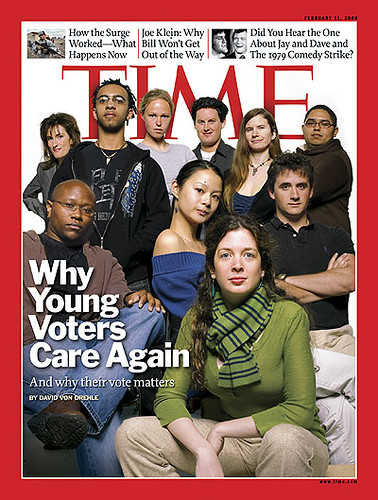
That said, presidential elections have far-reaching consequences, including for those of us with an interest in education, children, and peacemaking. And with the election now a week in the past, there is just enough space that our first impressions have had some time to settle. What I've been most struck by is the near universal pride in the election of an African-American to the presidency. It is an accomplishment that has blunted, at least temporarily, the rancor that has characterized the political arena for decades. This is perhaps most evident in the acclaim offered by those on the 'losing' side last week:
  • Condoleezza Rice, the first African-American Secretary of State, her eyes glistening spoke about it in an interview on NBC the day after the election: "As an African-American, I'm especially proud, because this is a country that's been through a long journey, in terms of overcoming wounds ... That work is not done, but yesterday was obviously an extraordinary step forward."
  • Former presidential candidate Mike Huckabee, on his blog, wrote, "As disappointed as I am that we have lost the election, I can't help but feel that many courageous leaders of the civil rights movement look down from heaven tonight with a smile that the day has come when a man is elected without regard to his color. I salute President-elect Obama for his discipline and tenacity that has given our country the opportunity to witness this significant event."
  • Less inclined to get caught up in the historical nature of the election but uncommonly admiring in his assessment, Fred Barnes, editor of the conservative Weekly Standard, said of President-elect Obama, "[H]e's a colossus astride the continent, the most commanding political presence since Ronald Reagan arrived in Washington."
  • Even John McCain, in his concession speech, recognized the history inherent in the moment: "[Although] we have come a long way from the old injustices that once stained our nation's reputation and denied some Americans the full blessings of American citizenship, the memory of them still had the power to wound. ...America today is a world away from the cruel and prideful bigotry of that time. There is no better evidence of this than the election of an African-American to the presidency of the United States."
We should frame this moment.

I doubt there is anyone who believes that this election marks the end of partisanship, but for those of us who have a stake in helping children and young people not only manage conflict but make positive changes to their communities this election marks a watershed moment. Young people became involved in community change on an unprecedented scale, changing the way that some adults think about young people. Consider this anecdote from a colleague's friend in Chicago:

My sister went to vote at 6:30 this morning. In the past, voting has been a very quiet occasion in the hood. This morning there was a line of folks. In the line were two black young men who she recognized as ne'er-do-wells from the neighborhood. They dutifully filled out their ballots and as it was being scanned by an elderly poll worker, she said to the young men "I am so proud of you." He responded, "Thank you, ma'am. I am proud of me too."

It makes me wonder what it is about this election - or this candidate - that made young people get involved. The cynical side of me suspects that it is largely a credit to just how bad things had become. (And I suppose there is some truth in that). The more hopeful side of me - a side which has really bloomed in the days since last Tuesday - is more liable to credit all kinds of things that are hard to touch and the mention of which call to mind the rhetoric of political campaigns: an historical moment, an ethos of optimism, faith in ourselves and each other. Could it be that they have become more than just buzzwords?

Beyond the buzz, though, I have learned from seven years of working to effect social change in schools that there is a lot to be said for having faith in young people. Community service is another one of those buzzwords, but to do it well requires sharing power with young people in a real way. It is something that carries inherent risks - that they will "fail" or "abuse" their power because they haven't yet developed the skills they need - but the benefits far outweigh the risks. At the conclusion of one Peacemaker Project a few years ago, a young student noted that, "Adults didn't think we could really do this kind of project, but we did." It sounds strikingly similar to the forecasts of political prognosticators in early 2007.

This is not to say that some projects don't fail - nor is it to suggest that President-elect Obama won't occasionally fail. He most certainly will, as we all do, but during his campaign he was able to convey a message to young people (and those of us who were young people some time ago) that faith in him would not be wasted. In order to ensure that it's not, it will require us to have faith in each other and our ability to stay engaged.

There are a lot of people counting on us.